Whether it’s a warehouse floor or a highway pavement, concrete slabs on ground all have one thing in common: joints. The saying goes that cracks are where you should have put the joint. Control joints are weakened planes in concrete put there to control where the concrete cracks, and to provide straight cracks that have a lower chance of further failure.
However, as was emphasized at a World of Concrete press conference, further failure is common. A typical warehouse spends more than $10,000 each year for joint repairs—not to mention equipment wear and lost time due to repair work. For runways, the most common foreign-object damage to jet engines from loose pavement is caused by failure at and around the joints.
The solution? According to Ken Vallens, president of engineering, sales, and research for CTS Cement Corp., the solution is to use shrinkage-compensating concrete (Type K) that allows much bigger panels and a longer concrete life. For example, at the airport in Rockford, Ill., CTS cement used with steel fibers and post-tensioning resulted in exceptional long-term performance where conventional concrete failed. Bigger panels are better for reducing problems with concrete floors.
-
Safety First at WOC
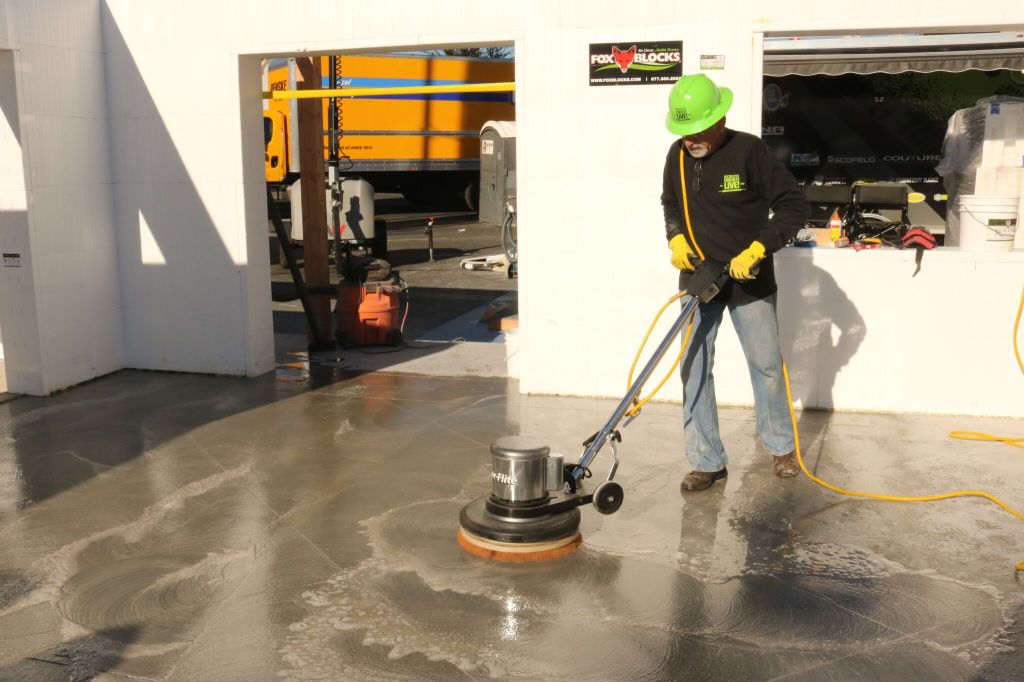
This year's Decorative Concrete Live demonstrations insisted that everyone work safe
-
Why Wider Panels for Concrete Floors are Best
Reducing joints results in more durable floors

-
SCC Today
WOC forum touts self-consolidating concrete for contractors and producers


